The Neighborhood Syllabus: How Informal Skill Exchanges Turn Local Know-How Into Real Learning
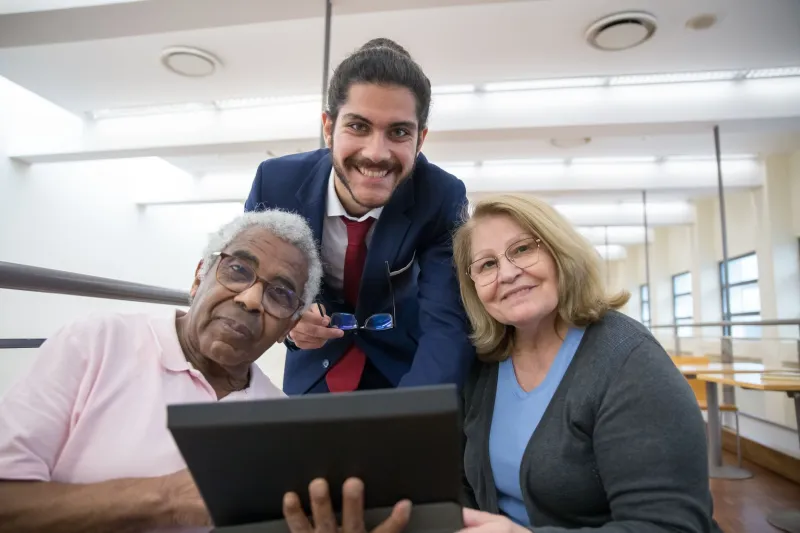
Photo: neighbors exchanging skills at community center workshop, via assets.sutori.com
Not every educational exchange requires a tuition line, a registration portal, or a certificate at the end. In many American neighborhoods, a quieter form of local learning is taking shape: residents trading expertise directly, sometimes for another skill and sometimes for time credits that can be spent elsewhere in the network. The appeal is obvious in an era of rising class fees, but the more interesting question is whether these informal swaps can become genuine instruction rather than scattered favors.
From Barter to Structured Learning
Skill swaps are not new. Barter networks and time banks have existed for decades, and church groups, unions, and immigrant associations have long passed knowledge from one member to another. What is changing in 2026 is the level of organization. Neighborhood associations, public libraries, and community centers are hosting matchmaking boards and orientation sessions, giving informal exchanges enough structure to function as learning rather than one-off assistance.
How a Typical Exchange Works
A resident posts an offer—beginner guitar, conversational Spanish, basic bookkeeping, small-engine repair—and a request—help with tax preparation, resume writing, or home maintenance. A coordinator matches participants, sets a session schedule, and records time credits. One hour of teaching earns one credit; one hour of learning spends one. Some groups use direct trades instead of credits. The best exchanges define goals before the first session: what the learner should be able to do after four meetings, what materials are needed, and how progress will be recognized.
Fairness Requires Rules, Not Just Goodwill
Reciprocity can sour when expectations are vague. A fair exchange states the time commitment, the cancellation policy, and the scope of the teaching. It also avoids pretending that all expertise is interchangeable. A licensed electrician should not be asked to trade a full kitchen rewiring for a few guitar lessons. Set boundaries around regulated professions and recommend licensed providers when the task requires one. Time credits should expire only after a clear notice period, and no one should be pressured to teach beyond a stated limit.
Safety and Inclusion
Exchanges involving minors, home visits, or power tools need extra care. Use public venues such as libraries and community rooms for first sessions. Require background checks when children are involved. Confirm that home-repair instruction includes safety equipment and that participants understand insurance limitations. A neighborhood exchange should also make room for people who cannot teach a conventional skill; organizing, translation, child care during sessions, and follow-up calls are legitimate contributions. Inclusion is not a courtesy added at the end; it determines whether the network serves more than the most confident residents.
Making It Genuinely Educational
A skill swap becomes education when it includes demonstration, practice, feedback, and progression. The teacher should explain not only what to do but why. The learner should leave each session with a small assignment. A simple learning agreement—four sessions, one clear goal, one assessment—prevents the exchange from becoming a social hour with occasional instruction. For groups, a shared syllabus or a short showcase at the end can add structure. Public libraries often provide meeting space and reference materials; EdNearMe can help identify nearby community resources that support these arrangements.
Where to Find or Start a Swap
Start with existing institutions: neighborhood associations, public libraries, community centers, faith communities, and adult education programs. Ask whether they host bulletin boards, time banks, or skill-sharing circles. If none exists, a small pilot can begin with ten participants and one coordinator. Publish clear rules, collect contact information, and hold an orientation. Keep records simple but consistent. Insurance and liability questions should be answered before home-based sessions are allowed.
The Limits of Reciprocity
Skill swaps are not a substitute for accredited instruction, licensed trades, or regulated professional advice. They work best for introductory knowledge, practice, and community connection. A learner who wants a recognized credential should still look to local colleges and certified providers. A neighborhood exchange can prepare someone for that step, but it should not pretend to replace it. Nor should it become a way to extract free labor from neighbors under the language of learning.
The one-square-mile skill swap is neither a utopia nor a loophole. It is a modest, practical way to make local knowledge visible and transferable. When neighbors define goals, respect boundaries, and document progress, the result is more than a favor exchanged. It is learning that belongs to the place where it happens.