Your City's Most Underrated Classroom Isn't a School at All
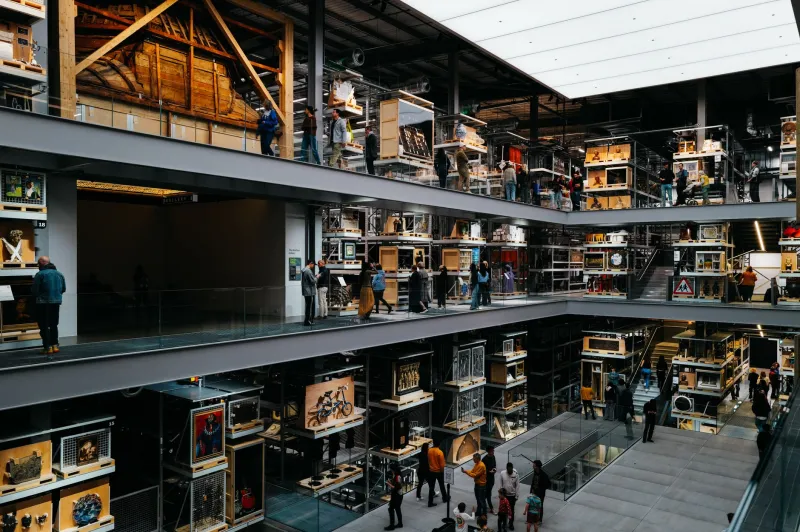
Here is an uncomfortable truth about how Americans shop for education: we compare tuition, rankings, and completion rates among colleges while ignoring institutions down the street that have been teaching adults for decades. Museums, science centers, zoos, botanical gardens, and historical societies are not merely places to look at things. Increasingly, they are places to learn things—formally, credibly, and cheaply.
We would go further: for many adult learners, the local cultural institution is the most overlooked educational asset in their community.
The Evidence Is More Than Anecdotal
Look closely at what major cultural institutions already deliver:
- Accredited and credit-bearing coursework. University-affiliated museums, such as those connected to state university systems, offer graduate-level courses, and many natural history and art museums partner with colleges to deliver credit-bearing classes on site.
- Professional development. Science centers and botanical gardens run teacher-training institutes, horticulture certificate tracks, and continuing-education workshops that count toward professional licensure in some states.
- Docent and volunteer training. These programs are, functionally, free mini-degrees in art history, local history, or marine biology—structured curricula, expert instructors, and assessments included.
- Credentialed certificate programs. Institutions like the New York Botanical Garden and the Corcoran's continuing education lineage have long offered certificates in fields from botanical art to landscape design that employers and clients recognize.
Add community lectures, citizen-science programs, and evening classes, and the picture becomes clear: a functioning adult education ecosystem, already built, already staffed by experts.
Why the Price Gap Is Absurd
Compare the arithmetic. A single graduate course at a private university can exceed $3,000. A multi-week certificate course at a metropolitan museum or science center typically runs between $100 and $600, with member discounts reducing it further. The instruction frequently comes from working curators, scientists, and practitioners—the same people universities would bill premium rates to hear lecture once.
The counterargument is obvious: cultural institution programs rarely lead to degrees, and degrees are what labor markets reward. That is true—but it is increasingly beside the point. Stacking a museum-run GIS workshop, a zoo-led conservation certificate, and a historical society archives practicum builds a genuine, demonstrable skill portfolio, particularly for career pivots into education, nonprofit work, communications, and the sciences. Employers in these sectors care about demonstrated engagement and concrete skills, not exclusively about where a diploma came from.
What This Means for Local Learners
The practical advice is straightforward:
- Audit the cultural institutions within 20 miles of you. Check their education or "learn" pages—not the exhibits pages—for adult programming.
- Membership is the multiplier. A $75 annual membership often converts to discounted or free classes, making sustained learning dramatically cheaper.
- Treat docent training as a curriculum. If you want structured knowledge in a subject and are willing to give time in return, it is arguably the best educational trade available.
- Ask about CEUs and partnerships. Many programs carry continuing-education units or transfer arrangements that are never advertised.
The Case, Stated Plainly
America's cultural institutions sit at the intersection of expertise, accessibility, and affordability in a way no university can match. They will not replace higher education, and they shouldn't be asked to. But for the millions of adults who want to keep learning—affordably, locally, and on their own schedule—the museum down the street deserves to be evaluated as what it has become: a serious educational provider.
The campus of the future may not have a quad. It may have a gift shop.