When the Learning Map Goes Blank: Understanding Educational Deserts and the Communities Fighting Back
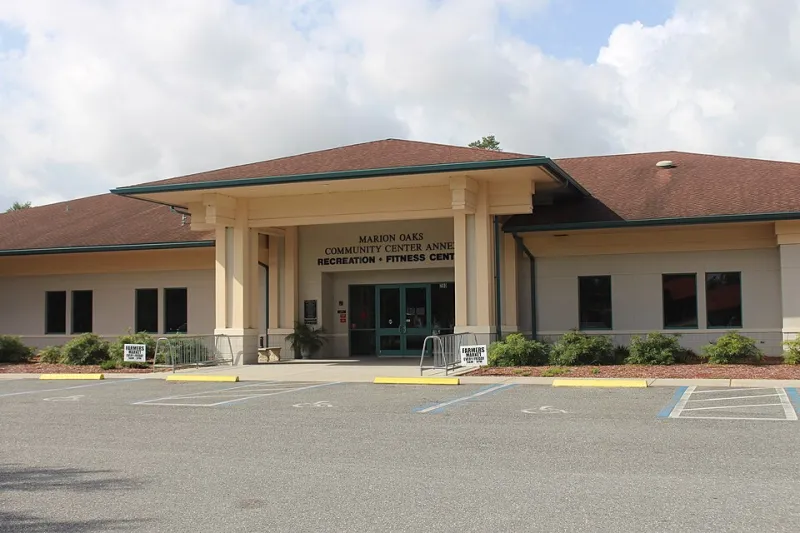
Photo: Michael Rivera, CC BY-SA 4.0, via Wikimedia Commons
Drive thirty minutes outside most major American cities, or venture into certain urban zip codes that have been overlooked by investment for decades, and a quiet but consequential reality becomes apparent: the learning infrastructure that middle-class families take for granted simply does not exist. No tutoring franchise on the corner. No enrichment studio offering robotics or creative writing workshops. No workforce development center within reasonable commuting distance. What researchers and education advocates are increasingly calling "learning deserts" represent one of the most underreported dimensions of inequality in the United States.
Understanding why these gaps exist—and, more importantly, what residents are doing about them—matters enormously for anyone trying to navigate or improve educational opportunities in their own community.
What Makes a Neighborhood a Learning Desert?
The term "learning desert" borrows conceptually from the well-established notion of food deserts, where geographic distance and economic disinvestment leave residents without reliable access to nutritious food. Applied to education, the concept describes communities where the density of supplemental and enrichment learning resources falls far below what is available in wealthier or more centrally located areas.
This is not simply about public school quality, though the two issues often overlap. Learning deserts refer specifically to the ecosystem of surrounding educational resources: private tutoring services, after-school enrichment programs, community college satellite campuses, vocational training centers, public libraries with robust programming, and even informal learning networks like mentorship organizations.
Several intersecting factors contribute to the formation of these deserts:
- Economic disinvestment: Private tutoring companies and enrichment franchises operate on market logic. They locate where disposable income exists. Low-income neighborhoods rarely attract these businesses regardless of demonstrated need.
- Transportation barriers: Even when a quality program exists in a nearby area, families without reliable transportation—or those dependent on underfunded public transit systems—face genuine logistical obstacles.
- Digital infrastructure gaps: The promise of online learning as a great equalizer has proven partially hollow. Households without consistent broadband access cannot reliably participate in virtual tutoring or e-learning platforms.
- Institutional abandonment: Decades of library funding cuts, community center closures, and reduced adult education budgets have removed anchor institutions that once provided free or low-cost learning resources in underserved areas.
The Uneven Geography of Opportunity
Data from various education research organizations consistently reveals stark geographic disparities. Rural counties in states such as Mississippi, West Virginia, and parts of the Great Plains frequently report fewer than one tutoring or enrichment provider per several thousand school-age children. Certain urban neighborhoods in cities like Chicago, Baltimore, and Detroit—despite their proximity to major institutions—show similarly thin resource maps once you exclude facilities that require significant fees or selective admission.
What makes this particularly consequential is the compounding effect. Children in resource-rich zip codes receive supplemental instruction, extracurricular enrichment, and early career exposure simultaneously. Their peers in learning deserts receive none of it. Over time, this gap does not merely reflect inequality—it actively produces it.
For adults, the stakes are equally high. Workers in communities without accessible retraining centers or community college branches find themselves locked out of career transitions that might otherwise be within reach. The workforce development infrastructure that could help a displaced manufacturing worker pivot into healthcare or technology simply does not exist within a reasonable radius of their home.
What Residents Are Building Instead
Perhaps the most striking aspect of this story is not the problem itself but the ingenuity of the response. Across the country, residents who have grown tired of waiting for institutional solutions are constructing their own.
Community-led learning hubs have emerged in church basements, converted storefronts, and public park facilities in dozens of cities. In some neighborhoods, retired teachers and professionals have organized informal tutoring cooperatives—meeting weekly to provide free academic support to local students. These are not polished operations with branded curricula, but they are consistent, trusted, and deeply embedded in the communities they serve.
Mutual aid learning networks have taken root in several cities, modeled partly on pandemic-era resource sharing. Residents pool skills and offer structured workshops on everything from financial literacy and resume writing to coding basics and small-business licensing. These networks operate with minimal overhead and maximum local relevance.
Advocacy campaigns targeting public libraries have gained momentum in multiple states. Community organizers have successfully lobbied for expanded library hours, restored programming budgets, and the addition of digital literacy resources in neighborhoods that had seen significant service cuts. Libraries, when adequately funded, remain among the most powerful equalizing forces in American civic life.
Partnerships between local employers and community organizations are filling workforce training gaps in some areas. Small manufacturers, healthcare networks, and logistics companies have begun co-sponsoring skills training in underserved communities—motivated partly by genuine need for local talent and partly by community pressure.
A Framework for Assessing Your Own Community
For residents who want to understand the learning landscape in their own area—and potentially contribute to improving it—a practical assessment framework can be useful.
Step one: Map what exists. Use tools like EdNearMe to identify tutoring centers, enrichment programs, community colleges, and vocational training providers within a realistic travel radius of your neighborhood. Note not just what is listed but what is accessible—consider hours of operation, cost, and transportation requirements.
Step two: Identify the gaps. Compare what you find against the needs of your community. Are there age groups underserved? Subject areas missing? Populations—such as adult learners, English language learners, or individuals with disabilities—without dedicated resources?
Step three: Engage existing institutions. Before building something new, determine whether existing institutions—schools, libraries, community centers, faith organizations—have capacity that is simply underutilized. Sometimes the resource exists but lacks visibility or coordination.
Step four: Connect with others who see the same gaps. Learning deserts are rarely invisible to the people living in them. Neighborhood associations, parent groups, and local civic organizations often contain individuals who share your concerns and may already be organizing.
Step five: Advocate with data. Local government officials, school board members, and community foundation leaders respond to documented need. Compiling and presenting data on resource gaps—even informally—can catalyze institutional action.
The Larger Obligation
Learning deserts are not inevitable. They are the product of specific policy choices, investment decisions, and institutional priorities made over time—which means they can, with sufficient will and organization, be unmade.
The grassroots efforts described here are admirable and genuinely impactful. But they should not be mistaken for a permanent substitute for the public and institutional investment these communities deserve. Residents building DIY learning hubs are doing extraordinary work under conditions of scarcity. The goal must be to support those efforts while simultaneously demanding the structural resources that make sustained educational access possible.
For readers who want to understand what learning opportunities exist near them—and where the voids are—tools like EdNearMe offer a starting point. The fuller picture, however, requires looking not just at what is on the map but at what has been left off it.