When Generations Learn Together: The Quiet Rise of Intergenerational Education in America's Small Towns

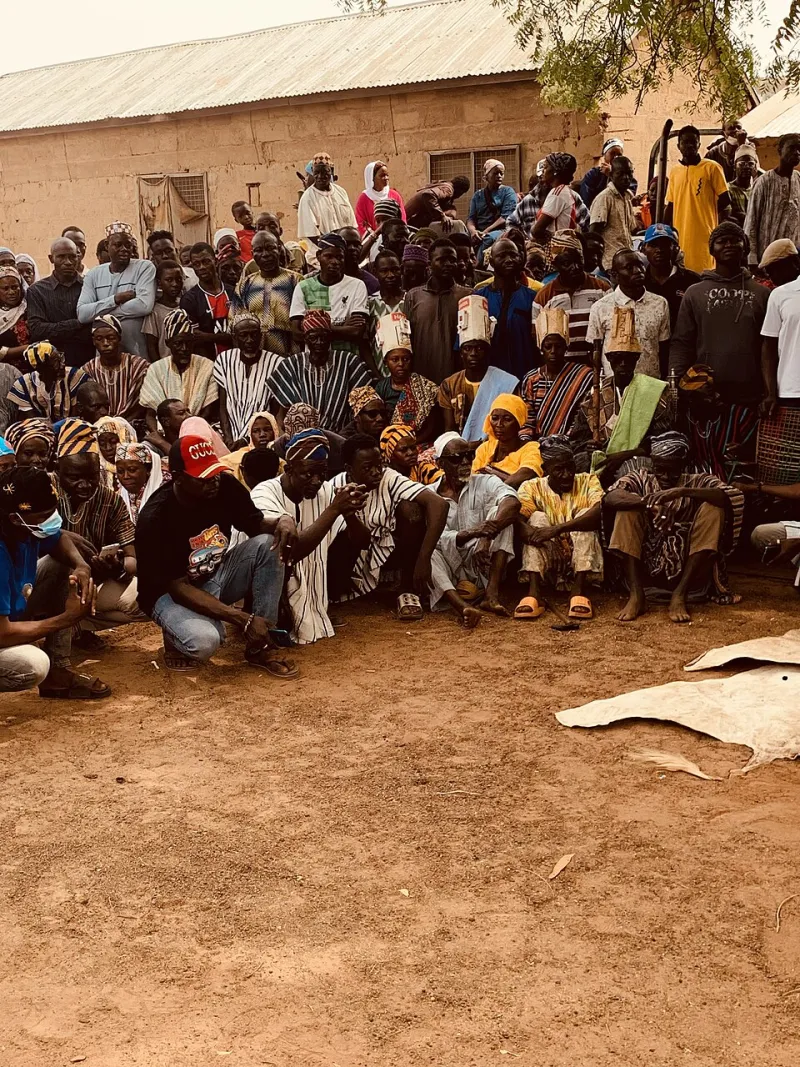
Photo by Photo by Yazid N on Unsplash on Unsplash
There is something quietly extraordinary happening in the fellowship halls, library meeting rooms, and community center gymnasiums of small-town America. In these spaces, a seventy-two-year-old retired schoolteacher is walking a group of eight-year-olds through the basics of vegetable gardening. Across town, a nineteen-year-old community college student is sitting beside an eighty-year-old veteran, patiently explaining how to video call a grandchild across the country. And in a converted storefront that doubles as a makerspace on weekday afternoons, a retired machinist is teaching teenagers how to use a lathe.
These are not isolated anecdotes. They represent a growing and increasingly well-documented trend: the intergenerational learning community. And while this model of shared education has existed in various forms for decades, it is experiencing a notable resurgence—particularly in smaller communities where formal educational infrastructure may be limited but social capital runs deep.
What Is Driving the Trend?
Several converging forces help explain the momentum behind intergenerational learning in small-town contexts. The first is demographic. The United States is aging rapidly; by 2030, all baby boomers will be sixty-five or older, and rural communities tend to skew older than their urban counterparts. At the same time, many small towns have seen younger residents leave for larger cities, creating a generational imbalance that both motivates and complicates community programming.
The second force is economic. As school budgets tighten and enrichment programs face cuts, communities have begun looking inward for resources. Retired professionals represent an enormous reservoir of expertise—in trades, arts, sciences, and civic knowledge—that often goes untapped. Intergenerational programs offer a cost-effective way to deliver meaningful education by drawing on that local expertise.
The third factor is psychological. Research consistently demonstrates that social isolation poses serious health risks for older adults, while younger people benefit cognitively and emotionally from sustained relationships with elders. Programs that bring these groups together tend to improve well-being on both ends of the age spectrum, and community organizations are increasingly aware of this dual benefit.
Real Programs, Real Results
The examples worth examining are not hypothetical. In Berea, Kentucky, the public library has hosted a recurring "Tech Bridge" series in which high school volunteers assist older adults with smartphones, streaming services, and online government portals. What began as a one-time event has evolved into a standing monthly program with a waiting list of senior participants.
In rural Vermont, a nonprofit called Lively Arts Exchange has facilitated skill-sharing circles where retirees teach traditional crafts—quilting, woodworking, canning—while younger participants offer instruction in digital photography, social media, and basic coding. Organizers report that attendance has grown steadily each year, with participants citing the social dimension of the program as equally valuable as the skills themselves.
In parts of rural Appalachia, some libraries have partnered with local schools to establish "Living History" reading and storytelling programs, where seniors share firsthand accounts of regional history with elementary-aged children. Teachers report measurable improvements in student engagement with social studies content following these sessions.
None of these programs required significant external funding to launch. Most began with a handful of motivated individuals, a willing host institution, and a modest organizational framework.
The Psychological and Community Case
The benefits of intergenerational learning extend well beyond the transfer of discrete skills. Psychologists who study aging have documented that older adults who engage in purposeful, structured teaching roles report greater senses of meaning and cognitive engagement than those who do not. For younger participants, sustained contact with older adults has been associated with reduced ageism, stronger communication skills, and a broader sense of community belonging.
At the community level, these programs serve a connective function that is difficult to quantify but easy to observe. In towns where different age groups rarely interact in structured ways, shared learning spaces create the conditions for genuine relationship-building. That relational infrastructure, in turn, tends to generate further community investment—volunteers who stay involved, donors who contribute to programs they have personally experienced, and civic leaders who emerge from participant cohorts.
How to Find These Programs Near You
If you are interested in participating in an intergenerational learning program, several pathways are worth exploring. Your local public library is often the most accessible starting point; many branches host or facilitate community education programs and can connect you with relevant organizations. The AARP's community resource locator (aarp.org/local) catalogs programs serving older adults by ZIP code, including many with intergenerational components.
The Generations United organization (gu.org) maintains a national database of intergenerational programs and can help connect interested individuals with established initiatives in their region. For those interested in programs with a specific focus—literacy, technology, arts, or trades—contacting your local community foundation or United Way chapter is often an effective strategy, as these organizations typically fund and track the nonprofit landscape in their service areas.
How to Start One If None Exists
For communities where intergenerational programming is absent or underdeveloped, the barrier to entry is lower than most people assume. A sustainable program typically requires three things: a host venue willing to provide space on a regular basis, a small coordinating group of two to four committed individuals, and a clear initial focus that matches available local expertise with identified community need.
Local libraries, faith communities, senior centers, and community colleges are all natural institutional partners. Grant funding is available through the Corporation for National and Community Service, the AARP Foundation, and many state humanities councils, though programs can and do operate effectively on volunteer labor alone in their early stages.
The most durable programs tend to start small—a single monthly gathering with a defined topic—and expand organically as word spreads and participation grows. The content matters less than the structure; what participants most consistently value is the regularity of contact and the sense that their knowledge, at whatever age, is considered worth sharing.
EdNearMe's mission is to help connect learners with opportunities in their local communities. Intergenerational learning programs represent one of the most human-centered expressions of that mission—reminding us that education, at its best, has never been solely about credentialing or career advancement. Sometimes it is simply about what happens when people of different ages sit down together and decide they have something to teach one another.